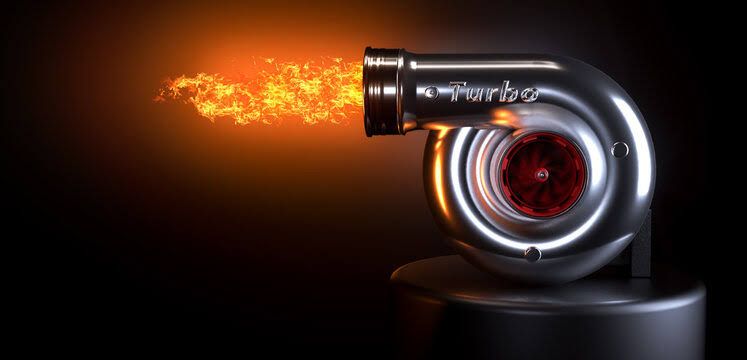
How Turbochargers Work: A Simple Guide
Turbochargers are an essential part of many modern vehicles, playing a key role in increasing engine efficiency and power output. Originally used in aviation and high-performance racing, turbochargers are now common in everyday cars, trucks, and even some motorcycles. But how does this small component make such a big difference in engine performance?
Introduction
At its core, a turbocharger is a device that forces more air into an engine’s cylinders, allowing it to burn more fuel and generate more power. This process, often called “forced induction,” allows smaller engines to perform like larger engines without requiring significantly more fuel. Turbochargers are especially valued in today’s automotive industry, where fuel efficiency and emission standards are stricter than ever.
Understanding how a turbocharger works, where it’s located in a vehicle, and its advantages and disadvantages can help drivers appreciate its role in modern engines and decide whether a turbocharged vehicle is right for them.
How Turbochargers Work
A turbocharger operates by using the energy from an engine’s exhaust gases to drive a turbine. As the exhaust gases leave the engine, they spin the turbine, which is connected to a compressor by a shaft. The compressor then draws in more air, compresses it, and sends it into the engine’s cylinders. This process allows the engine to receive a higher volume of oxygen, which is essential for combustion.
To break it down:
- Exhaust Gas Flow: The exhaust gases from the engine pass through a turbine, causing it to spin. This is the first half of the turbocharger’s work.
- Compressed Air Intake: The turbine is connected to a compressor. As the turbine spins, it powers the compressor, which draws in outside air, compresses it, and sends it into the engine.
- Boosted Combustion: When compressed air is added to the engine’s cylinders, it allows the engine to burn more fuel. This results in greater engine power and performance.
- Cooling: Since compressed air becomes heated, an intercooler is often used to cool the air before it reaches the engine. Cooler air is denser, which helps further improve engine efficiency and power output.
Placement of the Turbocharger
In most vehicles, the turbocharger is located near the exhaust manifold, which is the point where exhaust gases exit the engine. Its proximity to the exhaust manifold allows it to efficiently capture and utilize the exhaust gases’ energy. Additionally, because the turbocharger reaches extremely high temperatures due to the exhaust gases, it must be placed in a part of the engine bay where cooling is possible.
An intercooler, if included, is typically placed between the turbocharger and the intake manifold to cool the compressed air before it enters the engine.
The Role of the Turbocharger
The main role of a turbocharger is to improve engine efficiency and performance. By forcing more air into the engine, it allows for greater fuel combustion without increasing the engine size. This enables smaller engines to produce more power, which can result in faster acceleration and a more powerful driving experience.
Turbochargers are particularly useful in downsized engines, which are smaller and lighter but can still deliver high performance when equipped with a turbo. This has made turbocharged engines popular in sports cars, trucks, and even family vehicles, as they provide an excellent balance between fuel efficiency and power.
Advantages of Turbochargers
- Increased Power: Turbochargers allow smaller engines to produce more power by increasing the volume of air in the combustion chamber.
- Fuel Efficiency: By delivering more power from a smaller engine, turbocharged engines can be more fuel-efficient, particularly when driven conservatively.
- Lower Emissions: Turbochargers can help reduce the amount of carbon dioxide emitted by allowing for smaller engines without sacrificing power.
- Improved Performance: Turbocharged engines often provide better acceleration and responsiveness, which can make for a more engaging driving experience.
Disadvantages of Turbochargers
- Lag: One common drawback of turbochargers is turbo lag, which is a delay between pressing the accelerator and feeling the turbocharger’s boost. This occurs because the turbocharger needs time to spool up before providing additional power.
- Complexity and Maintenance: Turbochargers add complexity to the engine, which can increase maintenance requirements. They operate at extremely high temperatures, meaning components like oil and coolant systems need to be in top condition.
- Higher Costs: Turbocharged engines are often more expensive to produce and repair than naturally aspirated engines, which may increase the overall cost of the vehicle and its maintenance.
- Increased Heat: Because turbochargers are driven by exhaust gases, they can generate a significant amount of heat, which may require additional cooling components to keep the engine safe.
Examples of Turbocharged Vehicles
Turbocharged engines are common in many vehicles across different categories:
- Sports Cars: Vehicles like the Porsche 911 Turbo and the Ford Mustang EcoBoost use turbochargers to deliver high performance.
- Family Sedans: Even non-sports vehicles, such as the Honda Civic and the Toyota Camry, offer turbocharged engines in some models for a balance of power and fuel efficiency.
- Trucks and SUVs: Many trucks and SUVs, such as the Ford F-150 and the Chevrolet Tahoe, offer turbocharged options to provide the torque needed for heavy-duty tasks.
Conclusion
Turbochargers are a remarkable addition to modern engines, allowing for a balance between power, efficiency, and lower emissions. By using exhaust gases to compress incoming air, turbochargers enable engines to perform like larger engines while maintaining a smaller footprint. Though they come with certain disadvantages, like turbo lag and increased complexity, their benefits have made them a popular choice in a wide variety of vehicles.
For drivers, understanding how turbochargers work can provide insight into vehicle performance and maintenance needs. Turbochargers have not only reshaped the automotive landscape but also set new standards for engine efficiency and power, proving that sometimes smaller can indeed be mightier.



 Car2so
Leave a comment